
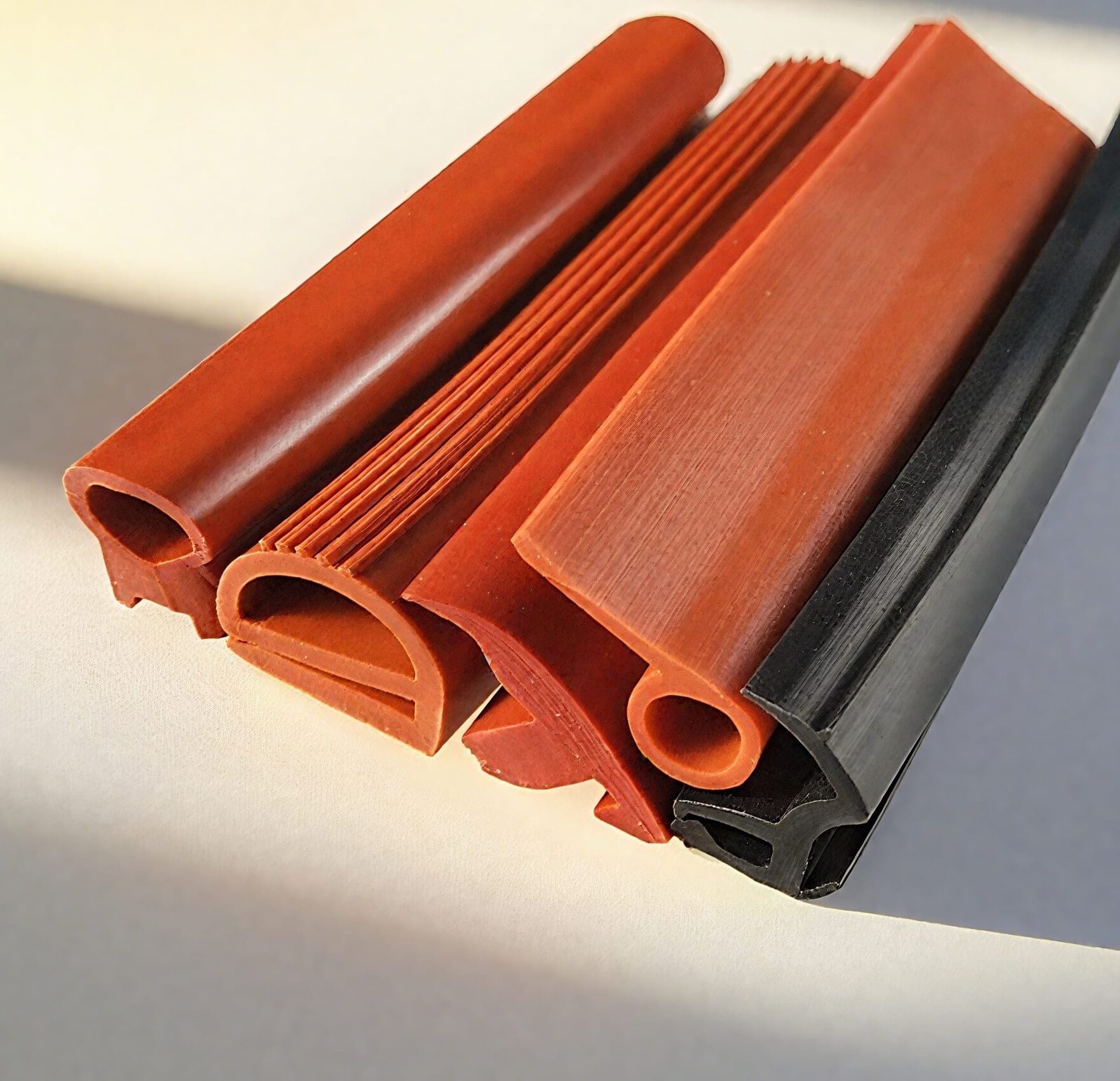
The maximum working temperature of silicone rubber sounds like a simple spec, but it is a selection risk if we treat it as one fixed number. Many teams pick a “max” and move on. Then, parts harden or crack months later. The cure is context: continuous temperature, short peaks, exposure time, and media.
Most general-purpose silicone rubbers operate continuously around 180°C (356°F) and tolerate short peaks of 200–230°C (392–446°F) for minutes to hours if dry and lightly loaded.1 However, the safe maximum working temperature of silicone rubber depends on your continuous temperature, peak duration, contact medium (air, water, steam, oils, chemicals), and design. Validate with application-specific tests.

You now have a headline answer, but that is only the start. The real question is whether a specific silicone tubing, gasket, or seal will survive your actual operating condition over time. Let’s break down how continuous vs. peak heat, media, material grade, and verification methods change the answer.
What does the maximum working temperature of silicone rubber really mean?
It is tempting to chase the biggest number. I see it often when buyers ask for the “highest temp silicone” without the duty cycle, load, or medium. That shortcut causes premature failures. The real “maximum” combines thermal aging limits with application stresses and safety margin.
The maximum working temperature of silicone rubber is not a single universal figure. It is the highest temperature a specific silicone part can withstand for its intended duration and environment without unacceptable loss of properties. Define it by continuous temperature, allowable short peaks, exposure medium, load, and required service life.
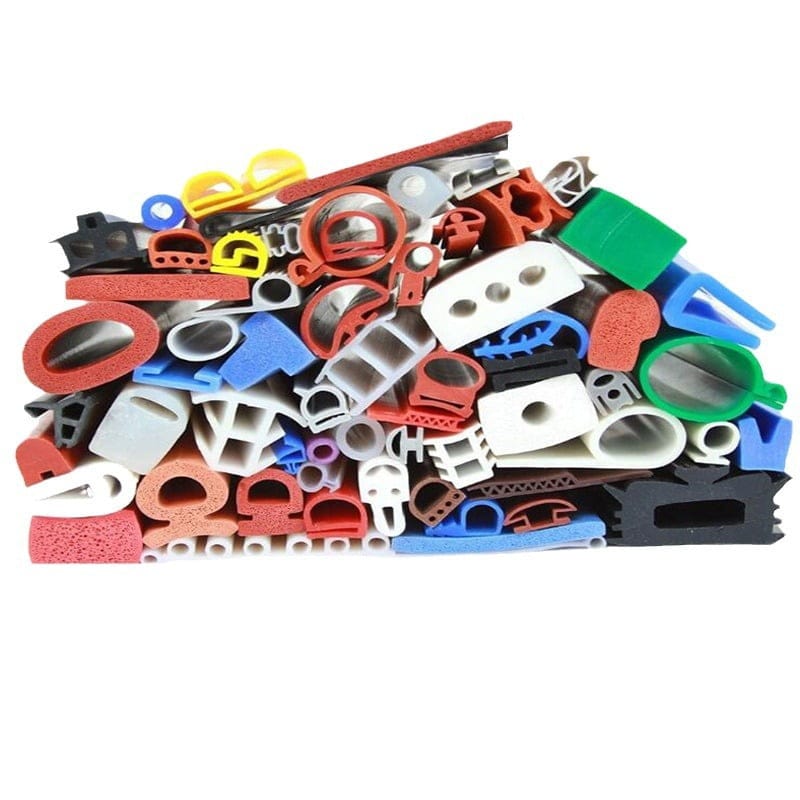
Dive deeper: From a single “max” to a safe operating window
When we discuss temperature ratings with engineering teams, we separate three ideas:
- Continuous operating temperature: The steady-state heat the part sees for most of its life.
- Short-term peak temperature: The highest temperature reached during transient events, such as sterilization or heat spikes.
- Safe application temperature: The validated range where property loss remains acceptable for your function and service life.
Silicone’s chemistry (VMQ) gives it superior thermal stability compared to many elastomers. In dry, oxygen-containing air, typical compounds retain elasticity up to about 180°C for continuous service, while brief exposures up to 200–230°C are often acceptable.2 But this assumes no unusual mechanical load, no aggressive media, and moderate exposure time. A common pitfall is using a short-term peak limit as a continuous rating. I once reviewed a case where a customer chose 220°C as a “continuous” spec because a competitor brochure listed 230°C “peak.” Their seals embrittled within weeks in a hot oven. The issue was not silicone’s incapability; it was misuse of the short-term number as a long-term limit.
Thermal aging follows kinetics that accelerate with temperature and oxygen presence. A classic engineering rule of thumb says many degradation reactions double in rate for each 10°C increase (an Arrhenius-like relation).3 So, a 20–30°C difference in setpoint can change years of life into months. Mechanical stress, compression set, and dynamic flexing raise risks. The “right” maximum working temperature of silicone rubber for your part must be derived from your scenario and validated with tests like ISO 188 or ASTM D573 (heat aging) and ISO 815 (compression set).
At Haiwang Silicone, we respond to “what’s the max?” with structured questions: continuous temperature, peak temperature and duration, cycle count, media contact (air, water, steam, oil, food), and load. Only then can we recommend a grade and verify through data and samples.
What continuous and short-term limits define the maximum working temperature of silicone rubber?
Teams need numbers to size risk. We can give a general range as a starting point, but we must keep it honest. The upper bound for continuous service is lower than brief peak resistance. Both depend on grade and environment.
As a general guide, many VMQ silicone rubbers operate continuously around 150–180°C, with short-term peaks of 200–230°C if dry and lightly loaded. For FDA/LFGB platinum-cured tubing and gaskets, we advise conservatively: 150–170°C continuous and 200–220°C short peaks.4 Validate with heat-aging and compression-set tests.
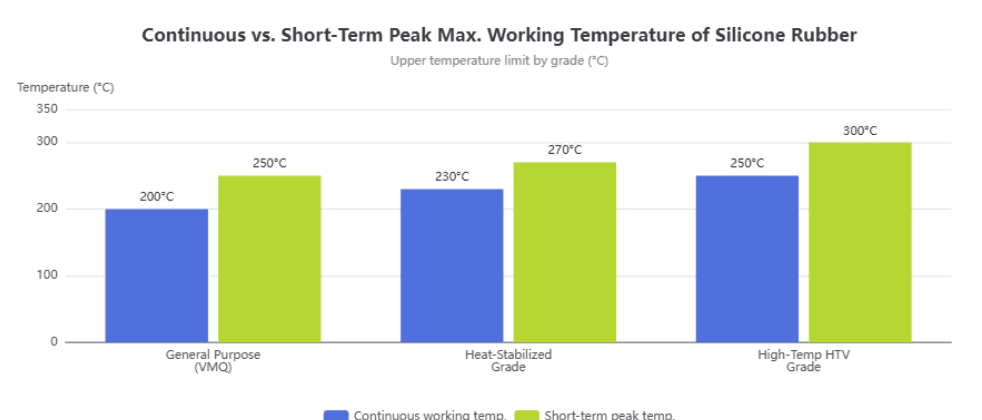
Dive deeper: Numbers in context, not in isolation
We do not present one number as a promise. Instead, we provide a conservative operating window that more buyers can rely on before tailored validation. For procurement and engineering evaluations, the following guidance helps:
- Typical VMQ silicone (general purpose):
- Continuous: 150–180°C (302–356°F) in air
- Short peaks: 200–230°C (392–446°F) for minutes to hours
- Food-grade platinum-cured silicone:
- Continuous: 150–170°C, selected for cleaner extractables and regulatory compliance
- Short peaks: 200–220°C (common for sterilization or brief spikes)
- Mechanical load and compression:
- Reduce these numbers if seals are under constant compression or dynamic motion at temperature.
- Thickness and geometry:
- Thin sections age faster due to heat penetration and oxygen access, but thick sections may trap heat and stress gradients.
Consider a food processing tube that runs at 150°C for 8 hours daily and sees a Clean-in-Place (CIP) peak of 170°C for 20 minutes. If the tubing is platinum-cured and in dry gas, that may be acceptable with margin. If the same line runs saturated steam SIP at 121°C for 30 minutes, we must account for steam’s different effect on silicone (see next section). If oils or fats are present, we expect softening or swelling depending on the formulation.
Use risk factors to assign margins:
- Increase margin if your application needs long service life (e.g., >2 years).
- Increase margin if oxygen-rich hot air or ozone is present.
- Increase testing if parts are under compression to limit compression set at temperature.
For consistent evaluation, use standard tests:
- ISO 188 or ASTM D573 to measure property retention after heat aging at target temperatures and durations.
- ISO 815 (compression set) at application temperature for seals.
- Reported properties include hardness change, tensile retention, elongation, and compression set.
We share data sheets and test summaries on request, but I always advise that buyers run application-specific tests because a lab oven in air is not the same as a pressurized CIP line.
How does contact medium change the maximum working temperature of silicone rubber?
The same temperature can be safe in air but risky in steam or oil. I encounter confusion here often. Teams assume 150°C is 150°C, regardless of medium. It is not. Media accelerate different failure modes: swelling, hydrolysis, extraction, or oxidative aging.
Media matter. In dry air, silicone maintains elasticity up to 150–180°C continuously. In hot water or steam, hydrolysis and property loss accelerate, so practical continuous limits often fall near 100–120°C with careful validation.5 Oils, fuels, and solvents can swell standard VMQ; consider fluorosilicone or alternate elastomers for those media.6
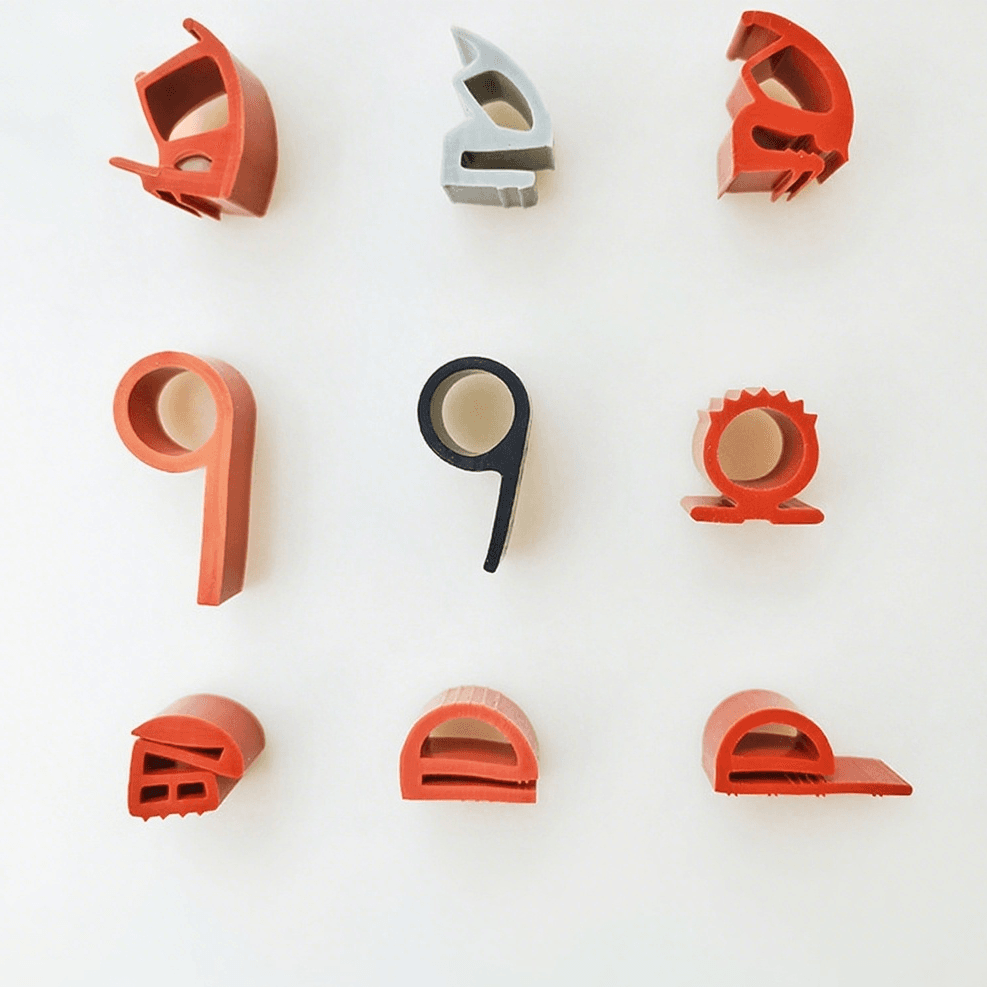
Dive deeper: Air vs hot water vs steam vs oils
Media change both chemistry and heat transfer. Below are practical patterns we see in customer projects:
- Air and inert gases:
- Silicone performs best relative to other media. Oxidative aging still occurs at elevated temperatures, but the material typically retains elastic properties longer in dry air.
- Hot water:
- Continuous contact with hot water near 100°C can cause property drift and promote hydrolysis, especially in dynamic seals. Compression set may increase faster than in dry heat.
- Steam (saturated):
- SIP cycles at 121°C are common in food and pharma.7 Standard VMQ can survive cycles, but repeated exposure accelerates property loss compared to dry heat. Higher-pressure steam or superheated steam is more aggressive. Many buyers eventually select EPDM for steam-rich duty, even if silicone handles peaks briefly.
- Oils and fats:
- Standard VMQ resists many oils better than natural or SBR but can still swell and soften depending on the oil chemistry and temperature. Food fats at elevated temperatures may extract plasticizers or cause softening, altering dimensions.
- Fuels and solvents:
- Standard VMQ is not recommended for fuels and many solvents at elevated temperature. Fluorosilicone (FVMQ) improves fuel and solvent resistance but does not dramatically increase thermal limits. It shifts the chemical resistance profile.
A simple selection matrix helps frame decisions:
| Medium/Environment | Typical continuous temp guidance | Notes |
|---|---|---|
| Dry air | 150–180°C | Peaking to 200–230°C if brief |
| Hot water | 80–100°C | Validate dynamically; watch compression set |
| Saturated steam (SIP) | 100–121°C | Cycle count critical; verify per equipment |
| Food oils/fats | 80–120°C | Depends on oil chemistry; test for swelling |
| Fuels/solvents | Not recommended for VMQ at high T | Consider FVMQ; thermal limit similar |
Two quick anecdotes: A beverage OEM asked for 180°C silicone tubing “continuous” in steam. We advised that the same tubing’s “max” in dry air did not carry over to steam. A trial confirmed early embrittlement. They switched to EPDM for steam and kept silicone for dry, high-temperature gas handling. Another OEM wanted a silicone gasket in hot sunflower oil at 140°C. The test showed unacceptable swelling. We offered fluorosilicone and, in parallel, a PTFE lip design to compare. Testing beat theory.
Bottom line: define your medium explicitly and test silicone in that medium at your real temperature and duration.
Which silicone grades and reinforcements push the maximum working temperature of silicone rubber?
Not all silicone is equal. Cure systems, fillers, reinforcements, and specialty grades shift heat and chemical performance. Buyers often assume “platinum-cured = higher temperature.” The reality is more nuanced: platinum cure improves purity and extractables; temperature performance varies by compound.
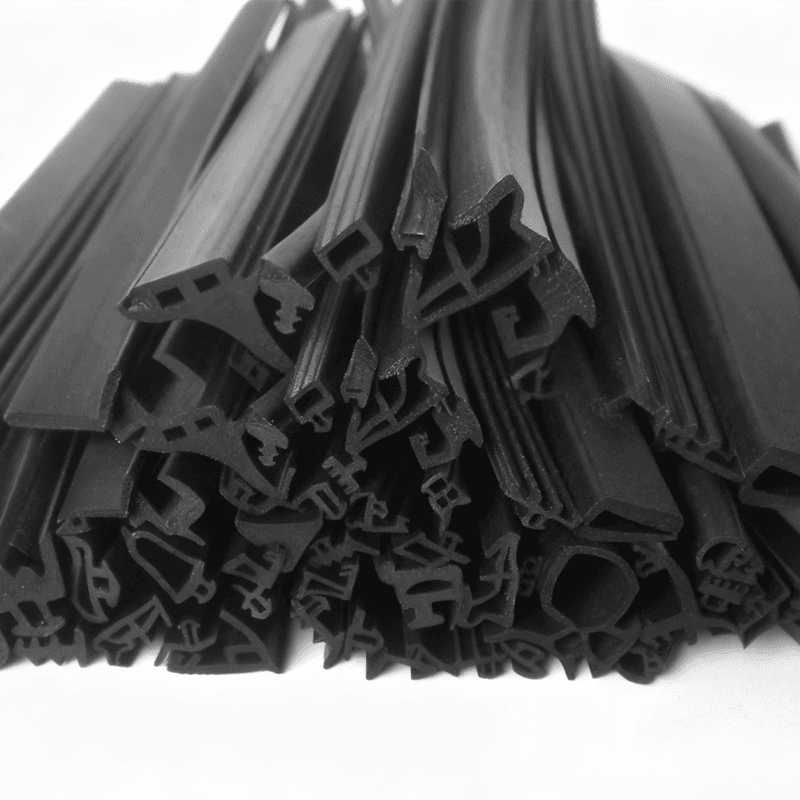
Material grade matters. General VMQ, platinum-cured compounds, high-consistency rubber (HCR), liquid silicone rubber (LSR), and fluorosilicone (FVMQ) each have different balances of heat and media resistance. Braided reinforcement raises pressure capability, not thermal limits. Always match grade to temperature, medium, and regulatory needs.
Dive deeper: Cure systems, grades, and what changes
Cure systems:
- Platinum-cured (addition-cured) silicone: Favored for FDA and LFGB compliance with low extractables.8 Thermal performance is typically similar to well-formulated peroxide-cured grades at the same hardness, but purity and odor are better. Choose for food, pharma, and medical applications.
- Peroxide-cured (high-consistency): Common in industrial seals and profiles. Some formulations tolerate slightly different aging profiles but do not count on a significant thermal advantage.
Product forms:
- LSR (Liquid Silicone Rubber): Suitable for precision molded parts. Thermal performance similar to HCR at equivalent formulations; choice driven by geometry, tolerance, and throughput.
- HCR (High Consistency Rubber): Typical for extrusions like tubing and profiles.
Specialty grades:
- High-temperature silicone compounds: Formulated to improve stability at the upper end of the range; verify data with supplier-specific tests.
- Fluorosilicone (FVMQ): Enhances resistance to fuels and solvents while keeping silicone’s flexible low-temperature behavior. Thermal upper limits are similar to VMQ; do not assume a higher maximum.9
- Conductive, flame-retardant, or oil-resistant grades: Additives can slightly change heat aging behavior; confirm with data.
Reinforcements:
- Braided-reinforced silicone tubing: The braid increases pressure rating at temperature. It does not increase the inherent thermal limit of silicone rubber. If the tube wall softens at high temperature, the braid helps resist burst, but the polymer still ages thermally.
Hardness and fillers:
- Higher durometer compounds can maintain dimensional stability under load at higher temperatures, but may have different compression set behavior. Filler systems influence heat aging; proprietary compounding matters.
At Haiwang Silicone, we formulate both platinum-cured and peroxide-cured compounds and supply braided and non-braided tubing, seals, and molded parts. For an equipment manufacturer, we typically shortlist two or three candidate compounds based on your temperature and medium, then send samples for heat-aging and media immersion tests. Certifications like FDA CFR 21 177.2600 and LFGB are documents to verify on your side; we provide certificates and test reports per batch on request.
How should buyers verify the maximum working temperature of silicone rubber for their application?
Procurement teams need a repeatable way to qualify suppliers and materials. I often see projects stall because teams rely on catalog numbers. A short verification plan protects you from surprises during production ramp.
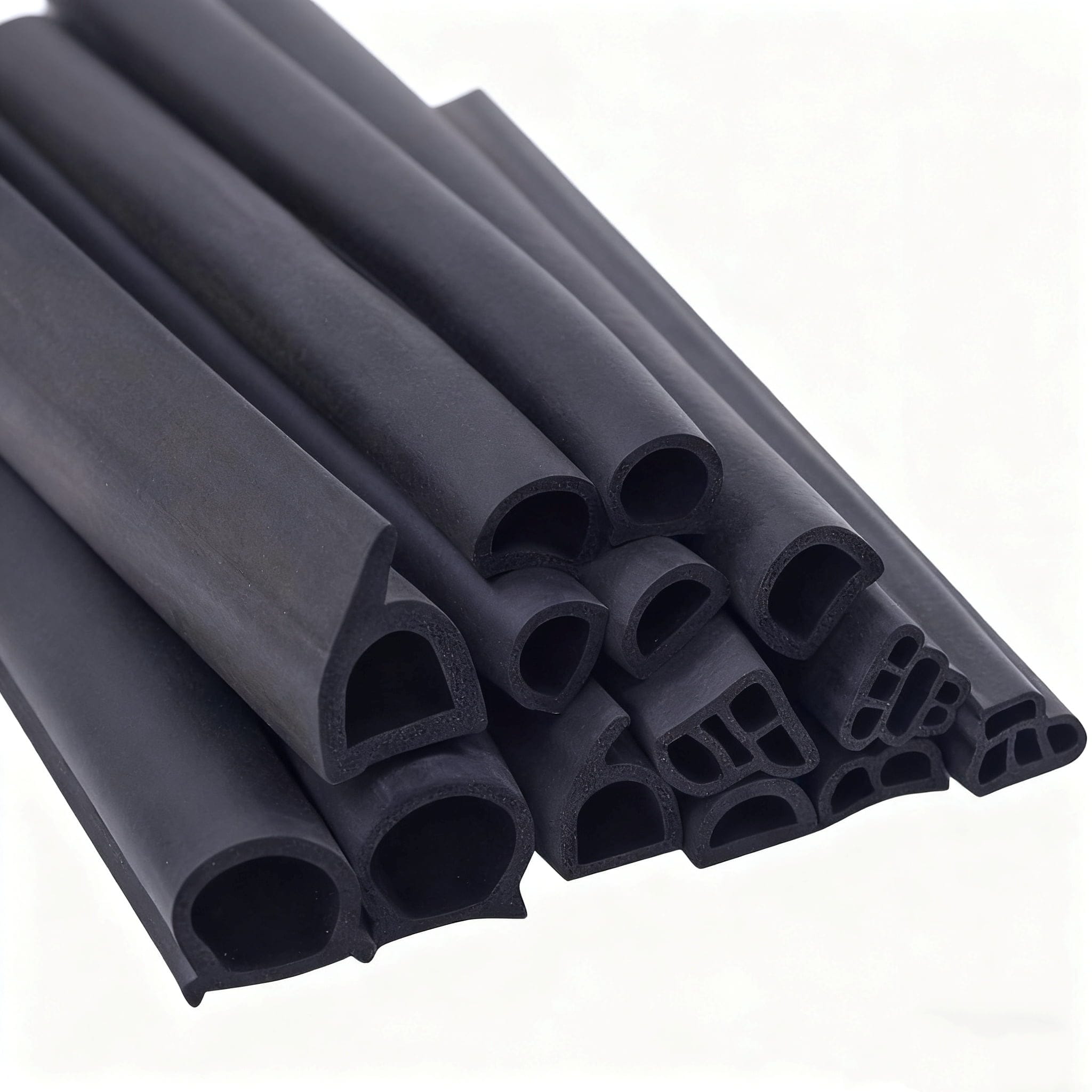
Verify the maximum working temperature of silicone rubber with application-specific testing: heat aging (ISO 188/ASTM D573), compression set (ISO 815) at target temperatures, and media immersion or SIP cycle tests. Align specs, grades, and certifications with your supplier. Approve via first-article inspection and pilot runs before full release.
Dive deeper: A practical B2B validation workflow
Use a structured plan to evaluate both the material and the supplier:
Define the application:
- Continuous temperature, peak temperature, and duration.
- Contact media (air, water, steam, oils, chemicals).
- Mechanical load: compression, tension, pressure, vibration.
- Service life target and safety margin.
Shortlist materials:
- Select VMQ or FVMQ, platinum or peroxide cure, durometer range.
- For tubing: decide on wall thickness and braid or no braid.
- Confirm regulatory needs: FDA, LFGB, RoHS, REACH.
Supplier documentation:
- Request material data sheets, FDA/LFGB certificates, ISO 9001 certificate.
- Verify documents’ validity and scope (product-specific vs. generic).
- Ask for a certificate of analysis (CoA) template and batch traceability.
Laboratory tests:
- Heat aging: ISO 188 or ASTM D573 at representative temperatures (e.g., 150°C and 170°C) for defined durations (e.g., 70h, 168h, 500h). Measure hardness change, tensile strength, elongation.
- Compression set: ISO 815 at application temperature and time (e.g., 22h or 70h).
- Media tests: Immerse in your target media at temperature, or run SIP cycles (e.g., 121°C saturated steam for defined cycles), then measure dimensional change and property retention.
- For tubing: pressure burst tests at temperature, especially for braided tubing.
Pilot runs:
- Install parts on a pilot line. Track performance under normal cycles.
- Inspect after defined intervals: look for hardening, cracking, swelling, or dimensional drift.
Decision gate:
- Approve materials and suppliers that meet criteria with margin.
- If performance is marginal, consider lowering setpoint, changing grade, or redesigning geometry (e.g., thicker wall, different durometer).
Ongoing quality:
- Include heat-aging spot checks and compression set checks in incoming QC for critical parts.
- Audit suppliers for process controls, cure consistency, and mold/tooling maintenance.
From our side, we offer in-house mold design and CNC tooling, so we can adjust geometry quickly if tests indicate a need for more margin. We also turn around quotes in 24 hours and typically ship within 2–6 weeks depending on tooling. The earlier we align on temperatures and media, the faster you get a robust result.
Frequently Asked Questions
Is 200°C safe for silicone rubber?
It can be for short peaks in dry air with light loads, but it is not a blanket continuous rating. Many VMQ silicones handle brief 200–220°C exposures. For continuous service, we recommend around 150–180°C depending on grade and conditions. Always verify with heat-aging and compression-set tests for your application.
Can silicone rubber be used in steam at 121°C?
Standard VMQ can survive SIP cycles at 121°C, but repeated steam exposure accelerates property loss compared to dry heat. Practical continuous operation in steam is often near 100–121°C with careful validation. Many buyers choose EPDM for steam-heavy duty and use silicone where dry high temperatures or purity are primary.
Does platinum-cured silicone have a higher temperature limit than peroxide-cured?
Not necessarily. Platinum cure improves purity, extractables, and odor, which is why it is preferred for FDA/LFGB applications. Thermal limits are similar to peroxide-cured silicone at the same formulation and durometer. Select based on regulatory needs and then validate performance at your temperatures.
Will braided-reinforced silicone tubing increase the temperature rating?
Braiding increases pressure resistance at temperature but does not raise the inherent thermal limit of silicone rubber. If the polymer ages or softens at high temperature, the braid helps prevent bursting, but the thermal degradation still proceeds. Validate both burst pressure and long-term heat aging.
What if my application involves hot oils or fuels?
Standard VMQ may swell or soften in hot oils and is not ideal for fuels. Fluorosilicone (FVMQ) improves resistance to fuels and many solvents while keeping silicone’s flexibility. However, its thermal upper limit is similar to VMQ. Evaluate FVMQ or alternate elastomers and verify via immersion tests at temperature.
Conclusion
The maximum working temperature of silicone rubber is not one universal number. It is a function of continuous setpoint, short-term peaks, exposure time, contact medium, load, and required service life. As a practical guide, many silicones run continuously around 150–180°C and tolerate short peaks to 200–230°C in dry air. However, your safe window must be proven by application-specific testing.
If you need silicone tubing, seals, or molded parts for high-temperature service, share your real operating conditions with us. At Haiwang Silicone, we tailor platinum-cured and industrial grades, design molds in-house, and support FDA/LFGB verification. Request a free consultation and quote within 24 hours, and we will help you validate the right material for your equipment.
"(PDF) SUMMARY ON RUBBER TECHNOLOGY - Academia.edu", https://www.academia.edu/9989009/SUMMARY_ON_RUBBER_TECHNOLOGY. Polymer engineering references commonly describe silicone rubber as suitable for continuous high-temperature service near 180°C and for higher short-term exposures, while noting that exact limits depend on compound formulation and service environment. Evidence role: general_support; source type: education. Supports: Silicone rubber is generally rated for high-temperature service near 180°C continuously, with higher short-term exposure limits depending on compound and conditions.. Scope note: This would provide contextual support for typical ranges, not proof that every general-purpose silicone compound meets the stated limits. ↩
"Understanding the Effects of In-Service Temperature and ...", https://pmc.ncbi.nlm.nih.gov/articles/PMC6473404/. Materials references report that VMQ silicone elastomers maintain useful elastic properties during continuous dry-heat exposure around 150–180°C and can tolerate higher intermittent temperatures, subject to compound formulation and exposure duration. Evidence role: general_support; source type: research. Supports: Typical VMQ silicone compounds maintain useful elastic properties at elevated dry-air temperatures, with continuous and intermittent limits in the stated range.. Scope note: The source would support typical performance ranges, not guarantee long-term survival of a specific tubing, seal, or gasket design. ↩
"Q10 (temperature coefficient)", https://en.wikipedia.org/wiki/Q10_(temperature_coefficient). Studies of thermal aging commonly model degradation kinetics with Arrhenius-type temperature dependence, and engineering treatments often use a Q10 approximation in which reaction rates increase markedly, sometimes about twofold, for each 10°C rise. Evidence role: mechanism; source type: paper. Supports: Reaction rates and aging processes often follow Arrhenius-type temperature dependence, with Q10-style approximations used as engineering rules of thumb.. Scope note: The twofold-per-10°C value is an approximation and may not apply to every silicone formulation or degradation pathway. ↩
"21 CFR Part 177 -- Indirect Food Additives: Polymers", https://www.ecfr.gov/current/title-21/chapter-I/subchapter-B/part-177. Technical references on platinum-cured and food-contact silicone elastomers indicate high-temperature capability broadly consistent with continuous service in the mid-100°C range and higher intermittent exposure limits, depending on formulation and end-use testing. Evidence role: general_support; source type: research. Supports: Food-contact or platinum-cured silicone products are commonly used within temperature ranges comparable to 150–170°C continuous service and higher short-term peaks, with validation required.. Scope note: This would contextualize the conservative range but would not independently verify the author’s specific product grades or regulatory certifications. ↩
"Silicone rubber", https://en.wikipedia.org/wiki/Silicone_rubber. Research and elastomer compatibility references report that hot water and steam can accelerate property changes in silicone rubber relative to dry air exposure, making lower practical service temperatures and validation testing necessary. Evidence role: mechanism; source type: paper. Supports: Exposure to hot water or steam can accelerate degradation or property loss in silicone elastomers compared with dry heat, reducing practical service limits.. Scope note: The exact 100–120°C range is application- and formulation-dependent and should be treated as contextual guidance. ↩
"Effect of Fluorosilicone Rubber on Mechanical Properties ...", https://pmc.ncbi.nlm.nih.gov/articles/PMC10458874/. Elastomer compatibility references distinguish VMQ from FVMQ by noting that standard silicone rubber may swell in fuels and various solvents, whereas fluorosilicone offers improved resistance to fuel and solvent exposure. Evidence role: general_support; source type: research. Supports: Standard VMQ has limited resistance to some fuels and solvents, and FVMQ is used where improved fuel and solvent resistance is needed.. Scope note: Compatibility depends strongly on the specific oil, fuel, solvent composition, temperature, and exposure time. ↩
"Steam Sterilization | Infection Control", https://www.cdc.gov/infection-control/hcp/disinfection-sterilization/steam-sterilization.html. Sterilization guidance and pharmaceutical engineering references commonly describe saturated-steam sterilization conditions around 121°C for defined exposure periods, providing context for the use of 121°C SIP cycles in food and pharmaceutical equipment. Evidence role: historical_context; source type: institution. Supports: Steam sterilization and SIP practices commonly use saturated steam conditions around 121°C for defined cycle times.. Scope note: The source would support the common sterilization condition, not the suitability of any particular silicone component for repeated SIP cycles. ↩
"Platinum Cured Silicone / High Consistency Rubber", https://www.stockwell.com/platinum-cure-hcr-silicone/. Materials and biocompatibility literature describes addition-cured platinum silicone as producing low byproduct residues and low extractables relative to some peroxide-cured systems, which helps explain its use in food-contact and medical applications. Evidence role: general_support; source type: paper. Supports: Addition-cured platinum silicone is associated with low levels of byproducts or extractables and is widely used where purity is important.. Scope note: Regulatory compliance must still be demonstrated for the specific formulation and product, not inferred from cure chemistry alone. ↩
"Fluorosilicone Rubber (FVMQ) | Properties & Applications", https://waynerubber.com/materials/fluorosilicone-rubber/. Elastomer references describe fluorosilicone as combining improved fuel and solvent resistance with silicone-like low-temperature flexibility, while its upper service-temperature range remains broadly comparable to that of VMQ rather than substantially higher. Evidence role: general_support; source type: research. Supports: FVMQ is selected for improved fuel and solvent resistance compared with VMQ while maintaining silicone-like temperature flexibility, with comparable high-temperature limits.. Scope note: Specific FVMQ grades can differ, so the comparison should be confirmed with compound-level data. ↩
发表回复