The Sealing Ring Between the Bin and the GF-13/1 Tablet Press?
The sealing ring between the bin and the GF-13/1 tablet press can look like a simple replacement part, but I have seen buyers lose time when they treat it as a universal spare. A small mismatch can cause powder leakage, contamination risk, or poor compression-area hygiene.1 The safer path is to confirm dimensions, material, and working conditions before ordering.
The sealing ring between the bin and the GF-13/1 tablet press should be sourced as a custom-fit sealing component, not assumed to be one standard machine-model spare part. Buyers should confirm inner diameter, outer diameter, cross-section, thickness, groove dimensions, powder contact conditions, cleaning method, temperature range, and required compliance documents before requesting a quote.
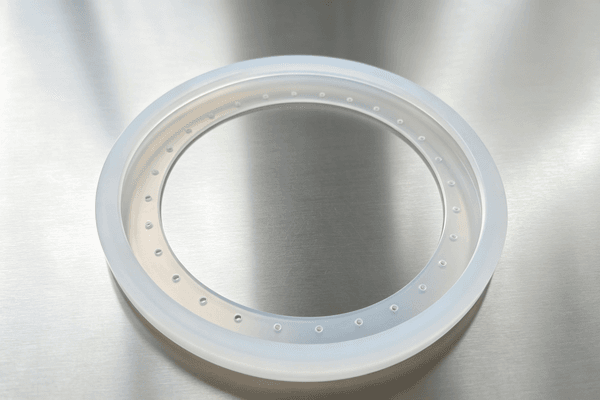
I write this from the viewpoint of a silicone seal manufacturer, not as the original equipment maker of the GF-13/1 tablet press. In our factory, I often receive old samples, photos, drawings, and dimension lists from overseas buyers. The best projects start with verified application details.
Why Isn’t the Sealing Ring Between the Bin and the GF-13/1 Tablet Press a Universal Spare Part?
The sealing ring between the bin and the GF-13/1 tablet press may appear to be a model-based spare part, but that assumption creates procurement risk. I have seen similar machine names connected with different seal sizes because of production batches, modifications, wear, or local replacement history.
The ring should not be purchased only by saying “GF-13/1.” A buyer should verify the actual interface dimensions and sealing conditions. The correct replacement depends on measured size, mounting structure, compression, material compatibility, hygiene requirements2, and whether the ring must resist powder leakage during normal equipment operation.
Model Numbers Do Not Always Confirm Seal Geometry
I always treat a machine model as a useful starting clue, not a final specification. In custom silicone manufacturing, one model name rarely tells me enough to quote safely. A sealing ring can be affected by:
- Different production batches
- Aftermarket machine modifications
- Previous non-OEM repairs
- Wear on the bin or machine interface
- Seal deformation after long service
- Different groove or mounting structures
- Regional variations in spare-part sourcing
This matters because a sealing ring works by controlled contact and compression3. If the ring is too thin, the seal may not close the gap. If it is too thick, it may deform, squeeze out, or create assembly stress.4 If the diameter is wrong, the ring may stretch, wrinkle, or fail to sit evenly.
What Buyers Often Send First
In our silicone seal business, I often receive RFQs that begin with one of these messages:
“We need a sealing ring for GF-13/1 tablet press. Please quote.”
That request is understandable, but I cannot responsibly confirm fit from that sentence alone. I usually ask for more information before I quote, especially when the part may contact powders used in food, nutraceutical, or pharmaceutical equipment.
A better first request includes:
- Measured inner diameter
- Measured outer diameter
- Cross-section shape
- Thickness or height
- Groove width and groove depth
- Photos of the old ring and installation position
- Contact powder or product type
- Cleaning method
- Temperature range
- Required documents, such as FDA, LFGB, RoHS, REACH, or ISO 9001-related quality records
Model-Based Buying vs. Confirmed Custom Sourcing
| Procurement Method | Main Advantage | Main Risk | When I Consider It Acceptable |
|---|---|---|---|
| Buying by machine model only | Fast initial inquiry | High risk of wrong size or material | Only when verified OEM part data is available |
| Copying an old sample | Good for matching shape | Old sample may be worn or swollen | Useful when combined with measured interface dimensions |
| Ordering from a drawing | Strong dimensional control | Drawing may miss application conditions | Good when material and tolerance details are included |
| Custom sourcing with dimensions and conditions | Best fit for procurement evaluation | Requires more preparation | Preferred for B2B replacement or OEM supply |
The key point is simple. I do not treat the sealing ring as “standard” unless verified specifications prove it. For overseas buyers, this approach reduces the chance of receiving a ring that looks correct on paper but fails during powder handling.
What Dimensions Should I Confirm for the Sealing Ring Between the Bin and the GF-13/1 Tablet Press?
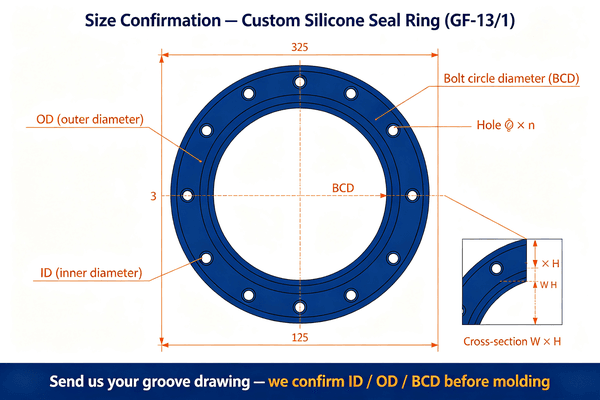
The sealing ring between the bin and the GF-13/1 tablet press should be measured at the actual sealing position, not estimated from a photo. I normally ask buyers to confirm the ring dimensions and the hardware dimensions because the old seal may already be compressed, stretched, or aged.
The most important dimensions are inner diameter, outer diameter, cross-section, thickness, groove width, groove depth, and mounting position. If the old ring is available, I suggest sending photos and a sample, but I still prefer confirmed measurements from the bin and machine interface.

Key Measurements I Usually Request
When I evaluate a custom silicone sealing ring RFQ, I prefer to receive both part dimensions and mating-structure dimensions. This gives me a clearer picture of whether the ring needs to be molded, extruded and joined, or made by another process.
| Dimension | Why It Matters | Buyer Tip |
|---|---|---|
| Inner diameter, or ID | Controls fit around the opening | Measure without stretching the old ring |
| Outer diameter, or OD | Confirms coverage and seating | Compare old ring with actual mounting area |
| Cross-section width | Affects compression and sealing force | Use calipers if possible |
| Thickness or height | Affects gap filling | Measure several points on worn parts |
| Groove width | Prevents looseness or squeezing | Measure the machine interface directly |
| Groove depth | Controls compression ratio | Do not rely only on old seal thickness |
| Joint position, if any | Affects sealing continuity | Show in photo or drawing |
| Tolerance requirement | Affects tooling and inspection | State critical and non-critical dimensions |
Why Old Samples Can Be Helpful but Not Perfect
I like old samples because they show the real shape, hardness feel, color, and sealing concept. However, old samples can mislead both buyer and manufacturer. Silicone and other elastomers may change after long service.5 They can flatten, swell, harden, tear, or absorb process odors depending on the operating environment.
For this reason, I often compare three sources of information:
- Old sample
- Buyer measurement
- Application interface dimensions
If all three agree, quoting becomes much safer. If they conflict, I ask the buyer to confirm which dimensions are functional. I do this because a custom silicone ring is not only a shape. It is a working seal.
Cross-Section Shape Matters
Many buyers focus only on diameter, but cross-section is just as important. The seal may be round, rectangular, D-shaped, lip-shaped, flat, or another custom profile. A small change in shape can affect compression behavior.
Common cross-section considerations include:
- Flat ring: Often simple to inspect, but compression must be controlled.
- Round O-ring style: Good for many grooves, but it needs the correct squeeze.
- Rectangular gasket style: Useful for flat interfaces, but edge quality matters.
- Custom profile: Useful when the groove or sealing surface is not standard.
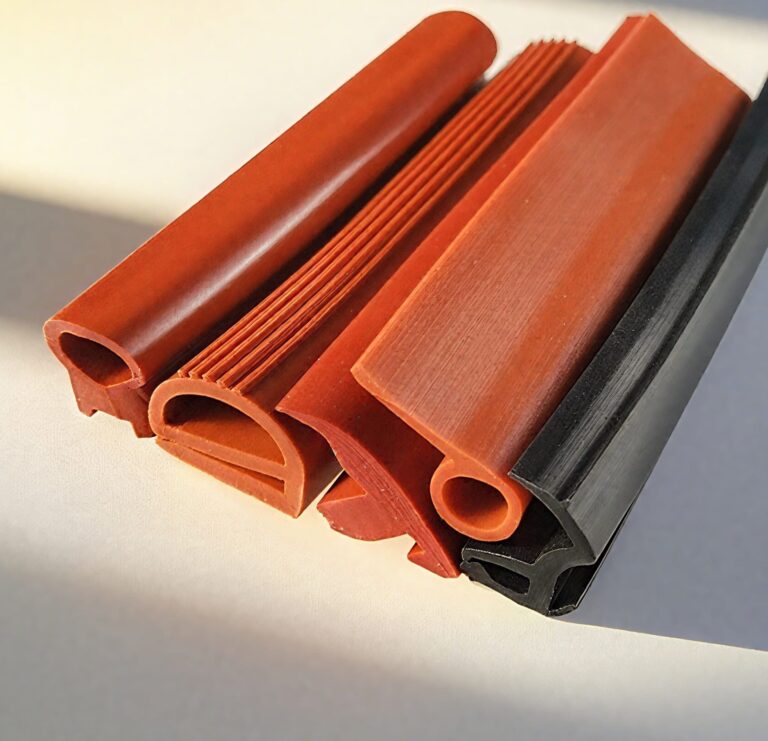
At Haiwang Silicone, we manufacture molded silicone parts, sealing strips, extruded profiles, and custom gaskets. I usually decide the production route after reviewing dimensions, quantity, tolerance, and material. For example, a simple ring may need a mold, while a special profile may require extrusion tooling and secondary joining. I do not recommend choosing the method before the actual geometry is confirmed.
Which Material and Compliance Details Matter for the Sealing Ring Between the Bin and the GF-13/1 Tablet Press?
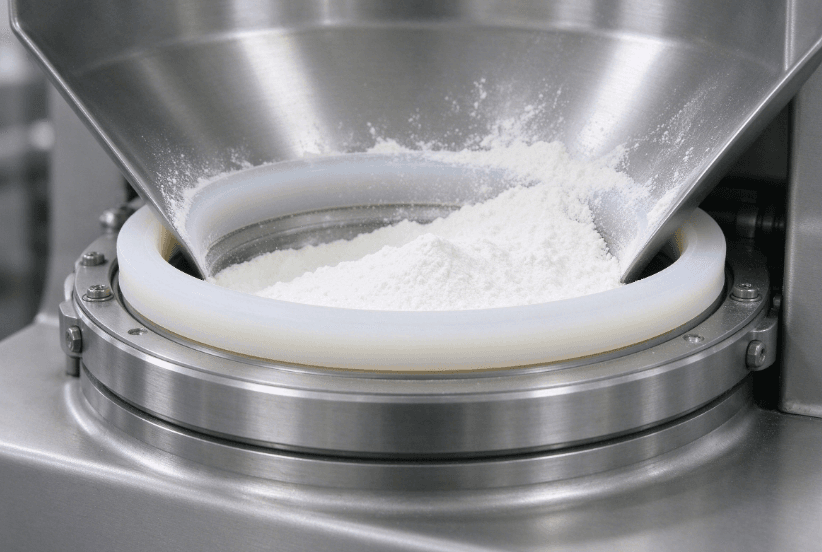
The sealing ring between the bin and the GF-13/1 tablet press may need food-grade or application-specific silicone, but that phrase alone is not enough. I always ask what powder contacts the ring, how the equipment is cleaned, and what temperature and compliance documents the buyer needs.
Material selection should consider product contact, cleaning chemicals, temperature, hardness, aging resistance, odor risk, color, and documentation. FDA or LFGB-related silicone may be suitable in many food-contact cases6, but buyers should verify the required documents against their market, product, and equipment validation process.
“Food-Grade” Is a Starting Point, Not a Complete Specification
I often hear buyers say, “We need food-grade silicone.” That is useful, but it does not answer every procurement question. In B2B sourcing, the supplier and buyer should connect compliance to actual conditions.
For example, I want to know:
- Is the powder food, supplement, pharmaceutical, chemical, or industrial material?
- Does the ring have direct or incidental contact?
- Does the process require FDA, LFGB, RoHS, REACH, or other documents?
- Is the buyer asking for a declaration, test report, material data sheet, or batch traceability record?
- Will the seal contact oil, flavoring agents, alcohol, solvents, cleaning chemicals, or steam?
- What is the operating and cleaning temperature?
Haiwang Silicone works with food-grade and industrial silicone materials, including platinum-cured silicone options. We hold documents such as FDA, LFGB, ISO 9001, RoHS, and REACH for relevant product categories and materials. However, I always recommend that buyers verify current documents, part-specific material selection, and regulatory suitability for their own application.
Material Choice Is Condition-Dependent
I do not say silicone is always better than rubber or every other elastomer. Silicone has useful properties, especially for clean appearance, flexibility, temperature resistance, and many food-contact applications.7 Still, the final choice depends on the actual contact material and service conditions.
| Material Factor | Why I Ask About It | Possible Impact |
|---|---|---|
| Powder type | Some powders are abrasive, oily, or reactive | May affect wear, swelling, or contamination risk |
| Cleaning method | Chemicals or high heat may age the seal | Material and hardness may need adjustment |
| Temperature range | Silicone performs well across many temperatures | Extreme conditions still need confirmation |
| Compression time | Long-term squeeze can deform seals | Compression set resistance matters |
| Hardness | Affects sealing pressure and installation feel | Too soft or too hard can both fail |
| Color | Helps visual inspection or brand standardization | White, translucent, red, blue, or custom colors may be requested |
| Odor and shedding risk | Critical for hygiene-sensitive equipment | Material quality and curing method matter |
Common Sealing Failure Risks
The real procurement risk is not only whether the ring fits on day one. I care about what happens after repeated cleaning, contact, and compression. A poor seal can create problems such as:
- Powder leakage
- Dust accumulation around the interface
- Possible cross-contamination
- Odor transfer
- Particle shedding
- Cracking or hardening
- Flattening after compression
- Deformation after cleaning
- Poor visual hygiene
For tablet press and powder-handling equipment buyers, these risks can affect downtime, cleaning workload, inspection results, and product quality control. I cannot evaluate a customer’s full process from one inquiry, so I usually suggest that the buyer’s engineering, quality, or validation team reviews the final material and design before production use.
Hardness and Compression Need Practical Balance
Silicone hardness is often measured in Shore A. Buyers sometimes request a hardness because they copied it from another gasket, but I prefer to understand the sealing function first. A softer ring can compress more easily, but it may deform if the gap and pressure are not suitable. A harder ring may hold shape better, but it may need more compression force to seal.
A practical RFQ should include the target hardness if known. If it is not known, I can suggest a starting range based on similar silicone sealing applications, but the buyer should test the sample under actual conditions before bulk approval.
How Should I Prepare an RFQ for a Custom Sealing Ring Between the Bin and the GF-13/1 Tablet Press?
A clear RFQ for the sealing ring between the bin and the GF-13/1 tablet press should start with confirmed dimensions and working conditions. I prefer this approach because it helps me quote faster, reduce back-and-forth emails, and avoid assumptions about machine-model spare parts.
A strong RFQ should include dimensions, drawings or photos, sample availability, material requirement, hardness, color, contact powder, cleaning method, temperature range, compliance documents, quantity, and expected delivery time. This information allows a silicone manufacturer to evaluate tooling, production method, inspection points, and quotation accuracy.
 )
)
My Preferred RFQ Checklist
When I receive a complete RFQ, I can usually respond much more efficiently. At Haiwang Silicone, we provide custom sizes, in-house mold design, CNC tooling support, and a free quote within 24 hours when the required information is clear.
Here is the RFQ checklist I recommend:
Machine reference
- GF-13/1 tablet press, if applicable
- Any batch, modification, or existing spare-part note
Seal dimensions
- Inner diameter
- Outer diameter
- Cross-section width
- Thickness or height
- Groove width and depth
- Tolerance requirements
Files and samples
- 2D drawing
- 3D file, if available
- Photos from several angles
- Old sample availability
Material requirements
- Silicone grade
- Platinum-cured requirement, if needed
- Hardness, such as Shore A target
- Color
- Surface finish
Application conditions
- Contact powder or material
- Direct or indirect contact
- Cleaning method
- Temperature range
- Compression or sealing environment
Compliance and quality documents
- FDA
- LFGB
- RoHS
- REACH
- ISO 9001-related factory documents
- Material test report or declaration request
Commercial details
- Estimated order quantity
- Sample quantity
- Annual demand
- Destination country
- Required lead time
Example RFQ Format
| RFQ Item | Example Buyer Input |
|---|---|
| Product | Custom silicone sealing ring for bin-to-tablet-press interface |
| Machine reference | GF-13/1 tablet press, buyer to verify dimensions |
| ID / OD | Buyer measured values |
| Cross-section | Drawing or sample photo attached |
| Material | Food-grade silicone, platinum-cured if required |
| Hardness | Buyer target or supplier recommendation for sample testing |
| Contact material | Powder name or general category |
| Cleaning | Wipe-down, water wash, chemical wash, steam, or other |
| Temperature | Operating and cleaning range |
| Documents | FDA/LFGB/RoHS/REACH as required |
| Quantity | Sample plus bulk order estimate |
Why This Helps Both Buyer and Supplier
A complete RFQ protects the buyer first. It reduces the chance of ordering a ring that fits the old sample but fails in the machine. It also helps the supplier evaluate whether a new mold is required. In our factory, tooling decisions depend on shape, tolerance, quantity, and inspection requirements.
For custom silicone sealing rings, MOQ and production method can vary. Haiwang Silicone commonly supports custom bulk production, with MOQ often starting from 50 kg depending on product type and material. For small replacement parts, I usually review the drawing first because very small quantities may still require tooling.
Sample Approval Is Important
I recommend sample approval before mass production whenever the seal affects powder containment, hygiene, or compliance. The buyer should check:
- Fit at the bin interface
- Compression feel
- Visual seating
- Powder leakage under actual use conditions
- Cleaning result
- Odor or surface change after cleaning
- Documentation match with the selected material
I do not present sample approval as a replacement for professional validation. For pharmaceutical, food, or regulated equipment, the buyer’s qualified engineering or quality team should evaluate the seal under their own process requirements.
Frequently Asked Questions
Can I order the sealing ring only by saying GF-13/1 tablet press?
I do not recommend ordering only by machine model. The model name is useful, but it may not confirm the actual ring size. I suggest measuring the seal and mounting area, then sending photos, drawings, or an old sample for custom matching.
Is food-grade silicone enough for this sealing ring?
Food-grade silicone may be suitable in many cases, but I still need contact powder, cleaning method, temperature range, and required documents. FDA or LFGB-related documentation should match the selected material and the buyer’s market requirements.
What if my old sealing ring is already deformed?
A deformed old ring can still help show shape and material style, but I would not copy it blindly. I prefer to compare the old sample with actual groove dimensions, interface measurements, and photos of the sealing position.
Can Haiwang Silicone make a custom replacement sealing ring?
Yes, I can help evaluate custom silicone sealing ring requirements based on drawings, samples, photos, and dimensions. Haiwang Silicone manufactures silicone sealing rings, gaskets, profiles, molded parts, and custom seals for overseas B2B buyers.
Should I choose molded silicone or extruded silicone for this ring?
The best method depends on the ring geometry, cross-section, tolerance, quantity, and sealing requirements. I usually review the drawing or sample first, then suggest whether molding, extrusion with joining, or another custom process is more suitable.
Conclusion
The sealing ring between the bin and the GF-13/1 tablet press should be evaluated as a custom-fit sealing component, not assumed to be one universal spare part. I recommend confirming dimensions, contact conditions, cleaning method, temperature range, material grade, and compliance documents before requesting a quote. If you have an old sample, drawing, or photos, Haiwang Silicone can review them and provide a practical custom silicone sealing ring quotation for your overseas B2B procurement project.
"Questions and Answers on Current Good Manufacturing ...", https://www.fda.gov/drugs/guidances-drugs/questions-and-answers-current-good-manufacturing-practice-requirements-control-components-and-drug. FDA current good manufacturing practice regulations describe equipment maintenance, cleaning, and sanitary design as controls intended to prevent contamination and product-quality failures. Evidence role: general_support; source type: government. Supports: Equipment condition, cleaning, and maintenance are recognized controls for preventing contamination in regulated manufacturing environments.. Scope note: This would support the contamination-control principle generally, not prove that a GF-13/1 sealing-ring mismatch specifically caused leakage. ↩
"Used Equipment Guidance for Michigan's Food and ...", https://www.michigan.gov/mdard/-/media/Project/Websites/mdard/documents/food-dairy/used_equipment_guidance_document.pdf?rev=4f7f9fe67c1c4eef8d59cfa43d79be0f&hash=F747651269A71F164CDD37DEAF355FBC. Engineering guidance for elastomeric seals treats groove geometry, compression or squeeze, material compatibility, and operating environment as interdependent variables in seal selection. Evidence role: expert_consensus; source type: institution. Supports: Seal selection depends on geometry, compression, materials, and service conditions rather than part name alone.. Scope note: The source would provide general seal-engineering support rather than machine-model-specific data. ↩
"Sealing performance of sealing structure in a sediment ... - PMC", https://pmc.ncbi.nlm.nih.gov/articles/PMC10613615/. Studies of elastomeric O-ring and gasket behavior describe sealing as the generation of contact pressure through controlled compression between mating surfaces. Evidence role: mechanism; source type: paper. Supports: Elastomeric seals generate sealing action through deformation that creates contact pressure against mating surfaces.. Scope note: The mechanism is general to elastomeric seals and is not specific to this tablet-press interface. ↩
"8 Major Causes of O-Ring Failure and Prevention Methods ...", https://www.gmors.com/article/8-Major-Causes-of-O-Ring-Failure-and-Prevention-Methods/detail. Mechanical analyses of elastomeric seals show that excessive squeeze raises contact stresses and can contribute to distortion, extrusion, or installation-related damage. Evidence role: mechanism; source type: paper. Supports: Excessive compression of an elastomeric seal can increase stress and contribute to deformation or extrusion-type failure.. Scope note: The source would support the failure mechanism generally, not establish a specific thickness threshold for the GF-13/1 ring. ↩
"Review of Aging Evaluation Methods for Silicone Rubber ...", https://pmc.ncbi.nlm.nih.gov/articles/PMC10006993/. Polymer-aging studies report that silicone rubber and other elastomers can undergo changes in mechanical properties and dimensional stability during prolonged exposure to heat, chemicals, or compression. Evidence role: general_support; source type: paper. Supports: Long-term service can alter elastomer properties such as hardness, elasticity, swelling behavior, and compression recovery.. Scope note: This supports the general aging behavior of elastomers, not a specific service-life prediction for the part discussed. ↩
"21 CFR 177.2600 -- Rubber articles intended for repeated ...", https://www.ecfr.gov/current/title-21/chapter-I/subchapter-B/part-177/subpart-C/section-177.2600. FDA food-contact regulations for rubber articles intended for repeated use, such as 21 CFR 177.2600, provide a regulatory basis for evaluating certain silicone-rubber materials in food-contact applications. Evidence role: general_support; source type: government. Supports: Regulatory frameworks exist for rubber or silicone materials intended for repeated food-contact use.. Scope note: Regulatory compliance depends on the exact formulation, extraction testing, use conditions, and market; the citation would not certify a particular supplier's material. ↩
"Silicone rubber", https://en.wikipedia.org/wiki/Silicone_rubber. General materials references describe silicone rubber as an elastomer with broad temperature stability and flexibility, and note its use in applications where suitable formulations are required for food or health-related contact. Evidence role: general_support; source type: encyclopedia. Supports: Silicone rubber is known for flexibility, thermal stability, and use in consumer, medical, or food-contact applications depending on formulation.. Scope note: This is contextual materials information and does not mean every silicone formulation is food-contact compliant. ↩

发表回复